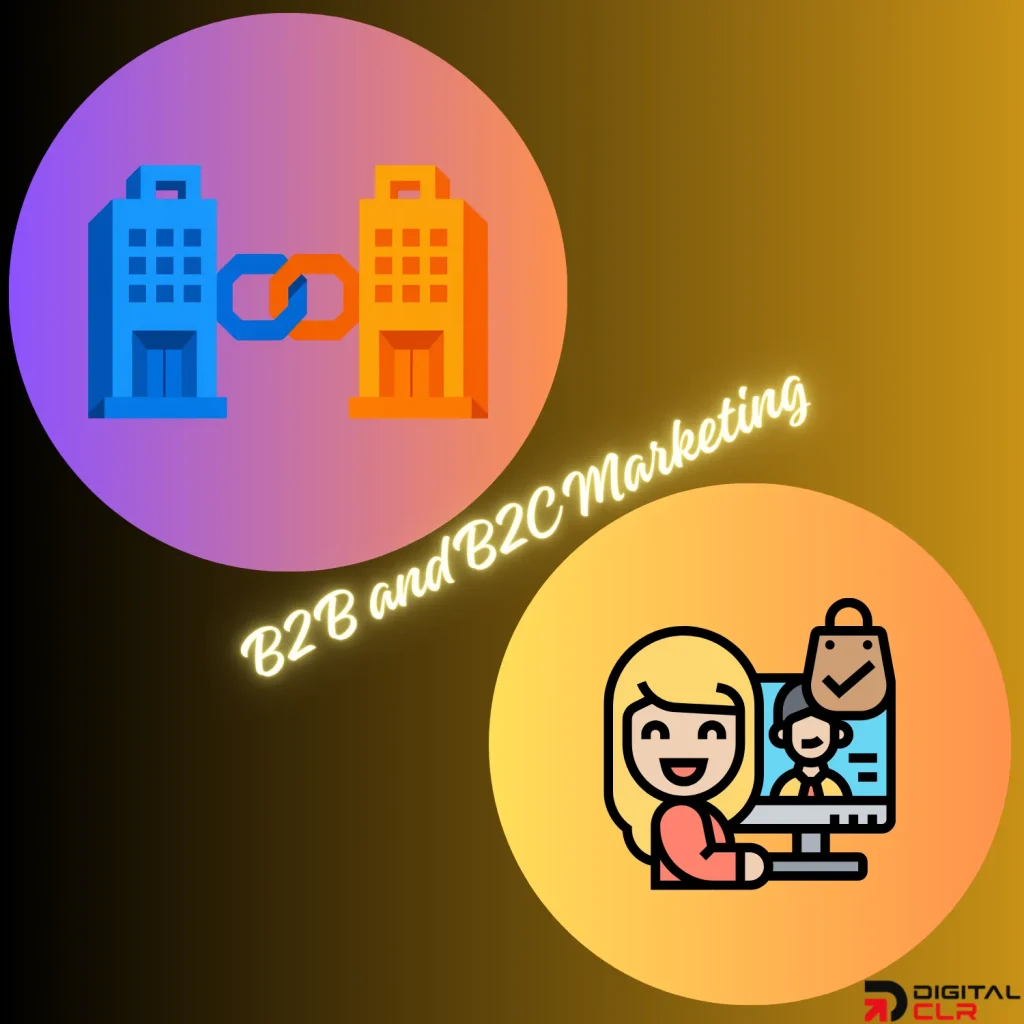
B2B and B2C digital marketing are two main mediums of digital business. Through both these mediums it is possible to build brand awareness and reach specific consumers. Although the main goal of these two types of marketing strategy is to improve business and increase sales, their target audience, marketing approach, content strategy and customer relationship building methods are different. Let’s see what the difference is.
The full meaning of B2B is Business-to-Business. In this type of Digital Marketing Strategy, a company or business promotes its products and services to another company or business.
Here business owners, company managers, CEOs and decision makers act as the main target audience instead of general customers.
The main objective of B2B Marketing is to build long-term relationships with potential business customers, gain their trust and generate new business opportunities through lead generation. B2B digital marketing takes the help of Linkedin, Email, Content and SEO Marketing.
On the other hand, B2C in its entirety means Business to Customer. In this type of Digital Marketing Strategy, a business sells its products or services directly to general consumers. The main goal of marketing here is to attract customers, create their interest and encourage them to make a quick purchase decision. Emotional Connection, Attractive Content, Brand Awareness and Customer Experience play a very important role in B2C Marketing.
In this case Facebook, Instagram add, Influencer. Marketing and video marketing help is taken.
Introduction to B2B and B2C Digital Marketing
B2B refers to a business process in which one company or business sells goods or services to another company or business, rather than selling products or services directly to general consumers. That is, here both buyer and seller are business entities.
Today many companies are using B2B Digital Marketing Strategy to expand their business, generate new clients and build long term business relationships. Through this they can reach potential business customers with the help of SEO, Content Marketing, LinkedIn Marketing, Email Marketing and Paid Advertising.
B2C is a business that deals with direct customers. When a business sells products or services directly to general consumers, it is called B2C or Business-to-Consumer. Currently this model is very popular. Companies sell their products or services directly to consumers. Here the main objective of the business is to fulfill the needs of individual customers and deliver products or services directly to them.
Currently most E-commerce Business, Retail Store, Food Delivery Service and Online Shopping Platform are operated through B2C model. Businesses use various Digital Marketing Strategies like Social Media Marketing, SEO, Google Ads, Email Marketing and Content Marketing to reach customers. Through this they can create brand awareness, increase customer engagement and directly increase sales.
What is B2B Digital Marketing?
B2B is a digital marketing method where any company sells their products or services to another company. That is, when a company does online marketing to sell their products or services to other companies instead of directly to general customers, it is called B2B Digital Marketing. The main goal of B2B Digital Marketing is to create communication between one business with another business using digital platform and increase new Business Opportunities and Sales through that relationship, increase Brand Awareness, find Potential Business Clients, create Quality Leads, create Business Relationships with other companies, ensure long-term Business Growth and increase Business Sales and Revenue.
What is B2C Digital Marketing?
B2C businesses reach out to general consumers directly through digital marketing. When a business sells goods or services directly to the general public, it is called a B2C business. Digital Marketing is very important in B2C business. Because through this business organization can directly reach potential customers. The main features of B2C Business are,
Direct Customer Interaction: Creating direct customer interaction.
Short Buying Cycle: Usually customers make quick buying decisions.
Emotional Marketing: Emphasis on customer emotions and preferences through advertising.
Brand Awareness: Creating awareness of the brand to more people.
Customer Experience: Providing better shopping experience to customers.
Why are B2B and B2C Marketing Strategies Different?
The reason for the differences in business strategy between B2B and B2C is their target audience, business goal, customer behavior and buying process.
For example, let’s say, in B2B marketing, a company wants to sell its product or service to another company. That’s why he has to make that kind of business strategy. That is, he is mainly marketed to business owners, company managers, CEOs or decision makers.
On the other hand, in B2C Marketing, campaigns are carried out targeting the general public or Individual Customers.
B2B business usually requires approval from multiple people. But in B2C business an individual’s own choice and budget is enough.
Sales cycle in B2B marketing is usually long. Because a company checks various options, negotiates and contracts before accepting a service.
On the other hand, the sales cycle in B2C marketing is relatively short. A customer can buy products quickly by seeing attractive offers, discounts or good product presentations.
The sales cycle in B2B marketing is usually long. Because a company checks various options, negotiates and contracts before accepting a service.
On the other hand, the sales cycle in B2C marketing is relatively short. A customer can buy products quickly by seeing attractive offers, discounts or good product presentations.
The main goal of B2B marketing is to generate quality leads, build business partnerships and ensure long-term business growth.
On the other hand, the main goal of B2C Marketing is to increase brand awareness, attract more customers, increase product sales and ensure customer retention.
Key Differences Between B2B and B2C Digital Marketing Strategies
Both B2B and B2C digital marketing aims to reach target audience, business growth and brand awareness. But even though the objective is the same, their strategies are also different due to the fact that the audience of the two fields is different.
So there are several differences in B2B and B2C digital marketing in terms of Target Audience, Content Strategy, Communication, Sales Process and Customer Relationship.
Let’s explore the important differences between B2B and B2C Digital Marketing Strategies.
Target Audience and Customer Behaviour
B2B Marketing: B2B marketing is mainly aimed at businessmen, company owners, managers, CEOs and decision makers. Here the marketing objective is to reach businesses that have a need for a specific product or service.
Example: A Digital Marketing Agency providing SEO, Website Development or Social Media Marketing services to another company.
B2C Marketing: B2C marketing is aimed at individual consumers. Here marketing is done according to the age, interests, preferences, lifestyle and shopping habits of the customers.
Example: A Clothing Brand is promoting clothing ads to the general public through Facebook and Instagram Ads.
Marketing Goals and Objectives
B2B Marketing: The main goal of B2B digital marketing is to generate quality leads, build business relationships and achieve long-term business deals.
B2C Marketing: The main goal of B2C marketing is to increase brand awareness, reach more customers, increase website traffic and increase direct product sales
Buying Decision Process
B2B Marketing: Buying decisions in B2B businesses usually depend on logic, budget, product performance and long-term profitability. Many times approval of multiple individuals or departments is required before a product can be purchased. So it takes relatively more time to make a decision.
B2C Marketing: In B2C business, customers generally make purchase decisions based on their needs, preferences, emotions, price and product attractiveness. In many cases decisions are made quickly.
Sales Cycle and Conversion Time
B2B Marketing: The sales cycle of B2B businesses is usually long. Because there are multiple steps like discussion about the product or service, pricing, meeting, negotiation and concluding the contract.
B2C Marketing: Sales cycle of B2C business is relatively short. Customers can view ads, learn about products and shop directly according to their preferences.
Content Marketing Approach
B2B Marketing: B2B marketing usually involves creating informative, educational and credible content. Because business buyers want to know about the functionality, benefits, value and business requirements of a service or product before buying it.
Case Studies, Industry Reports, White Papers, Detailed Blog Articles, Webinars Content is created on top of it.
B2C Marketing: B2C marketing makes more use of engaging, straightforward and entertaining content, which creates interest among customers and encourages purchases. For example, content is created depending on Product Videos, Instagram Reels, Customer Reviews, Promotional Posts, Influencer Marketing.
Communication and Brand Messaging
Communication style and brand messaging are not the same in B2B and B2C marketing. Because these two types of businesses have different customers, needs and purchasing decision-making processes.
B2B Marketing – Communication style in B2B marketing is usually Professional, Informative and Trust-based. Here a business provides detailed information about a product or service to another business. Therefore, product quality, functionality, ROI (Return on Investment), Business Benefits and Long-term Value are highlighted through Brand Messaging.
B2C Marketing – On the other hand, communication style in B2C marketing is usually simple, engaging, personal and emotion-driven. Here the main objective of the brand is to create a good relationship with the general customers and make them interested in the product or service.
So in terms of Brand Messaging more importance is given on Product Benefits, Customer Experience, Lifestyle, Discounts and Special Offers.
Customer Relationships and Engagement
B2B Marketing: Building long-term business relationships is very important in B2B marketing. Because one company can work with another company for a long time. So regular communication, good service and maintaining credibility is essential.
B2C Marketing: B2C marketing focuses on customer satisfaction, good shopping experience and building brand loyalty. This encourages the customer to make repeat purchases.
Marketing Channels and Platforms
Marketing Channels and Platforms are very important when it comes to B2B and B2C Digital Marketing. Because by choosing the right marketing platform, a business can easily reach its target audience, increase brand awareness and generate new customers.
B2B digital marketing uses platforms where it is possible to connect with business professionals, company owners and decision makers. Here more importance is given on Professional Networking, Lead Generation and Business Communication. Like Linkedin, Google Search & Google Ads, E mail marketing, business website, webinaries,
B2C Marketing – B2C digital marketing uses platforms that can easily reach common people and promote products or services according to their interests. Here more importance is given on Visual Content, Customer Engagement, Brand Awareness and Direct Sales. Like Facebook, Instagram reels, Google Ads, etc.
Budget and Advertising Strategies
Budget and Advertising Strategies are very important when it comes to B2B and B2C Digital Marketing. Because how much money a business spends on marketing and how it uses that budget to reach the right customers, advertising effectiveness and business growth depend a lot.
B2B Marketing – B2B digital marketing usually involves planning advertising budgets to reach specific and potential business clients. Here, the aim is not only to reach more people, but also to generate quality leads and build long-term business relationships.
B2B marketing uses channels like LinkedIn Ads, Google Ads, Email Marketing and Content Marketing. Lead Generation Cost, Customer Acquisition Cost, Conversion Rate and Return on Investment are considered while deciding the advertising budget.
B2C Marketing – On the other hand, B2C digital marketing uses advertising budgets to promote products or services to general consumers. Here more emphasis is given on increasing Brand Awareness, generating Website Traffic, Customer Engagement and directly increasing Product Sales.
B2C businesses use platforms like Facebook Ads, Instagram Ads, YouTube Ads and Google Shopping Ads. Reach, Impressions, Click-Through Rate, Conversion Rate and Return on Ad Spend are monitored while determining the advertising budget.
B2B Digital Marketing Strategies: What Works Best?
The main goal of B2B digital marketing is to sell the products or services of one business to another business. Therefore, the main goal of their marketing is to find a potential client and build a long-term professional relationship.
So B2B businesses need digital marketing strategies that help them reach the right decision-makers, build credibility and collect quality leads.
Let’s see which B2B Digital Marketing Strategies work best.
Search Engine Optimization (SEO)
SEO is a very important marketing strategy when it comes to B2B digital marketing.
B2B companies can increase organic traffic and reach potential business clients by using proper keywords to get a business website ranked well in search engines.
The first step in B2B SEO is choosing the right keywords. Because, different companies use different types of search terms in Google according to their business needs.
Best Digital Marketing Agency for Businesses, B2B Software Development Services, Enterprise IT Solutions, Wholesale Product Suppliers, Business Consulting Services Creating website content using such keywords creates an opportunity to reach potential clients searching for specific business requirements.
Content Marketing and Blogging
Content Marketing & Blogging is an important strategy of B2B Digital Marketing. Through this, a business or brand creates and publishes content that is relevant, informative and interesting to consumers. Its main objective is to increase brand awareness among customers, build trust, drive website traffic and ultimately increase business sales.
B2B company websites need to have content that gives potential clients a clear idea of their business needs, problems and solutions.
In this case, each service page should clearly state what kind of services the company provides, what kind of business that service is suitable for and how it can solve the clients’ business problems.
Blogging is a method of regularly publishing informative and educational articles on a website. Through this a business can highlight its products, services, industries and answer various questions of customers.
LinkedIn Marketing
LinkedIn Marketing is a very effective marketing platform for B2B Marketing. Because there is an opportunity to make direct contact with various company owners, CEOs, managers, professionals and decision-makers.
Linkedin Marketing mainly targets professional audiences. A business can attract potential customers by regularly sharing its services, products, experiences and industry-related information on LinkedIn.
Create a Professional Company Page on LinkedIn to showcase business contacts, services, work experience, and accomplishments. This in turn increases brand credibility with potential customers. Regularly publish industry-related articles, business updates, case studies, infographics and educational posts on LinkedIn to reach specific audiences. Company employees can share company content, achievements and business updates from their LinkedIn profile. This can increase brand awareness and content reach.
Reach Target Professionals, Generate Quality B2B Leads, Build Brand Authority, Create Business Relationships, Improve Business Opportunities are the main objectives of Linkedin Marketing.
Email Marketing and Lead Nurturing
Email Marketing and Lead Nurturing are two very important strategies when it comes to B2B digital marketing. Through this a business can create direct contact with potential customers and gradually convert them into actual customers.
Email Marketing is a digital marketing method, where business organizations deliver products, services, offers and various promotional information to their target audience or potential customers through email. Businesses that deliver various offers, new products, services, updates and essential information to customers through email.
On the other hand, the main purpose of Lead Nurturing is to build long-term relationships with potential customers and help them make purchasing decisions. Not all potential customers are ready to buy a product the first time they visit a website. Many people want to know about products, compare services of different companies or take some time before making a purchase. Lead Nurturing plays an important role in this scenario.
PPC Advertising and Google Ads
One of the most important strategies in B2B digital marketing is PPC Advertising and Google Ads. Through this, businesses can quickly reach the target audience by advertising online and increase Website Traffic, Quality Leads and Sales.
Nowadays many businesses use Paid Advertising to promote their products and services. By advertising on search engines like Google in particular, it is possible to reach customers who are already looking for a particular product or service.
Google Ads is an online advertising platform of Google, through which businesses can display paid advertisements on Google Search Results, YouTube, various websites and other partner platforms of Google.
Using Google Ads, businesses can manage ads based on specific keywords, locations, demographics, and audiences.
With the help of this it is possible to reach new customers, increase website traffic, lead generation and increase product sales.
PPC or Pay-Per-Click Advertising is a paid digital marketing model, where the advertiser usually has to pay only when a user clicks on his ad.
In this way, businesses can show ads according to specific keywords, locations, audiences and interests.
The main objective of PPC Advertising is to reach potential customers in less time, increase website traffic and generate leads and sales.
Webinar and Case Study Market
Webinar and Case Study Marketing are two very important techniques when it comes to B2B Digital Marketing. Through this method a business can showcase its products, services and expertise to other businesses. In addition, it is possible to gain the trust of potential customers and generate new business leads.
Webinar Marketing is a digital marketing strategy to present business products, services and expert knowledge to potential customers by organizing Live or Recorded Seminar, Workshop or Educational Session online.
Through B2B Business Webinar, a company can discuss their Industry-related issues, new technologies, Business Solutions and Marketing Strategies. Select specific Target Audience, Select relevant topics for Webinar, Promote Webinar through Social Media, Email Marketing and Website.
Organizes Live Presentation, Discussion and Question-Answer Session
Webinar marketing generates potential business leads by gathering information from participants.
Case study is very effective in B2B Marketing, as it not only promotes a product or service, but also proves the business’ competence and credibility through practical experience. Case Steady is identifying the customer’s business problem, highlighting what strategy has been used to solve their problem. Presenting real data, statistics and customer feedback is the job of case study. The purpose of case study is to increase the opportunity to convert potential customers into clients by showing real work results.
B2C Digital Marketing Strategies: What Works Best?
The main goal of B2C Digital Marketing is to create Brand Awareness, Attract Potential Customers, Increase Customer Engagement and ultimately increase Sales and Revenue. SEO marketing, Social media marketing, Content Marketing, Facebook and Instagram Advertising are used for this work.
Social Media Marketing
Social Media Marketing plays a very important role in B2C means Business-to-Consumer Digital Marketing. Because B2C businesses have to deliver products or services directly to general consumers.
Social Media Marketing not only promotes products, but also helps in increasing Brand Awareness, creating Customer Engagement and increasing Sales. Through Facebook, Instagram, YouTube and other social media platforms, any business can easily create communication with customers and influence their purchasing decisions. -As a result, a business can easily make its brand known to many people. Customers can learn about the brand and its products through regular posts, pictures, videos, reels and advertisements on the social media platform Gumi. Ads can be delivered to specific customers based on different age, location, interests and online behavior. As a result the business can easily communicate with its potential customers.
Influencer Marketing
Influencer Marketing is a technique of B2C digital marketing, where a product, service or brand is promoted using popular and influential people (Influencers) on social media.
Nowadays Influencer Marketing is very popular on Instagram, Facebook, YouTube and other social media platforms. Because, people often decide to buy a product by looking at the advice and reviews of known or favorite content creators.
How Does Influencer Marketing Work?
First, choosing the right influencer is the right influencer according to the business product and target audience. Those influencers share product photos, videos, reels or posts on their social media accounts.
They highlight their experiences about product features, usage and benefits in their reels or posts. As a result, their followers communicate with potential customers through comments, likes and shares. Customers are interested in buying products through links, promo codes or recommendations provided by influencers. This is how a whole new product or service reaches many people very quickly.
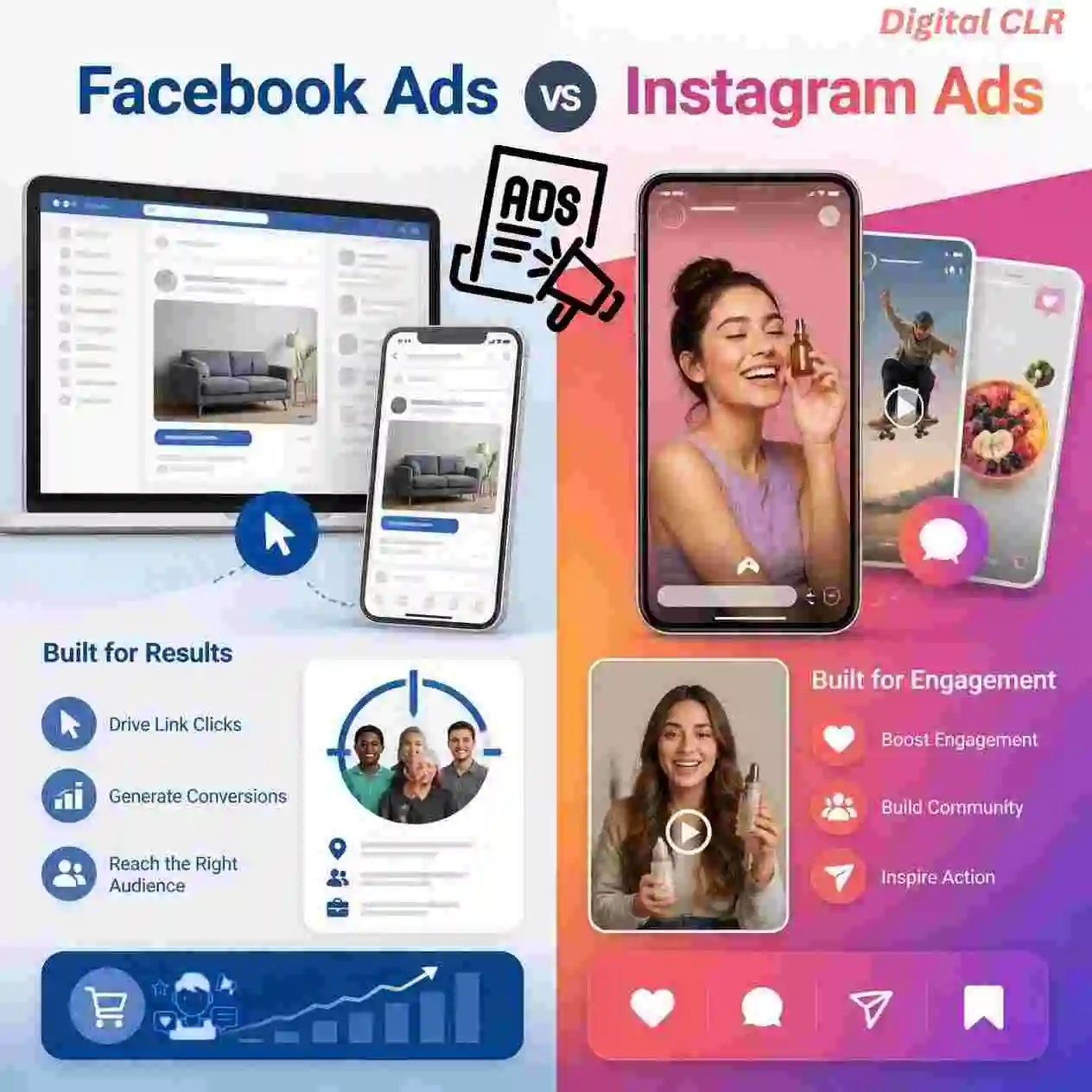
Facebook and Instagram Advertising
Facebook and Instagram Advertising is an important strategy of social media marketing, through which businesses can promote their products, services or brands to specific target audiences by promoting paid ads on Facebook and Instagram.
Currently both these platforms are managed under Meta. So merchants can create, manage and analyze ads on Facebook and Instagram from the same place using Meta Ads Manager.
Let’s see how Facebook and Instagram Advertising works —
Products or services are promoted on social media using attractive images.
Product features, uses and benefits are highlighted through videos.
Multiple images or videos can be shown within an ad. It is useful for displaying various products of e-commerce businesses. Full-screen ads are displayed within Facebook and Instagram Stories. Viewers are attracted through short video ads within Instagram and Facebook Reels.
As a result, it is possible to reach a brand’s advertisement to a large number of people through Facebook and Instagram.
Ads can be shown to potential customers based on a specific age, location, interests and other available targeting criteria.
Brand awareness can be increased to people through regular and attractive advertising.
Advertising can bring visitors to the website, gather information about potential customers and create opportunities to sell products.
SEO and Content Marketing
SEO and Content Marketing are two important techniques of B2C digital marketing, which help in increasing the online presence of a business, driving organic traffic to the website and attracting potential customers.
SEO (Search Engine Optimization) is basically the process of getting a website to rank well in search engines like Google. On the other hand, Content Marketing is the strategy of creating and publishing valuable and informative content keeping in mind the needs, interests and problems of customers.
Using these two strategies together can help a business build its online presence and credibility in the long run.
Video Marketing
Video Marketing is a very effective marketing strategy in B2C (Business-to-Consumer) digital marketing. Through this, a business can use video content to promote their products, services and brand directly to the general public.
Currently, the popularity of videos on platforms like YouTube, Facebook, Instagram is very high. Therefore, through video marketing, businesses can easily attract people’s attention and make potential customers interested in purchasing the product. The aim is to increase the popularity of the product by highlighting the quality of the product through video. Entertaining, educational and informative videos help to increase brand communication with the audience. Facebook Reels, Instagram Reels and YouTube Shorts allow businesses to reach more people with their products and services. Video marketing is not only a means of product promotion, but also a powerful strategy for building relationships with customers and building long-term brand awareness.
Email Marketing and Promotional Campaigns
Email Marketing and Promotional Campaigns are an important marketing strategy in B2C (Business-to-Consumer) digital marketing. Through this, a business can directly deliver various products, services, offers and new updates to their potential customers and existing customers with the help of email.
The main purpose of email marketing is to maintain regular contact with customers, generate interest in new products and increase sales.
Currently E-commerce Website, Online Shopping Platform and various Retail Business use Email Marketing to attract their customers.
When a business launches a new product, it can email customers with product images, features, prices, and other information. Thank you messages, special offers, loyalty rewards and exclusive discounts are sent to maintain relationships with old customers. This increases the likelihood of repeat purchase.
It is a medium to reach direct customers. As a result, the company’s engagement with customers is easily developed.
B2B vs B2C Digital Marketing: Advantages and Challenges
Let’s see the advantages & challenges of B2B and B2C digital marketing
Benefits & Challenges B2B Digital Marketing
B2B i.e. Business-to-Business Digital Marketing is a marketing method in which a business promotes its products or services to other businesses through a digital platform. B2B Digital Marketing plays an important role in today’s competitive market. Through this business can find new customers, increase brand awareness and build long-term business relationships.
But along with this there are some challenges, which need to be managed properly.
What are the benefits?
B2B Digital Marketing can be used to reach specific business customers. It is possible to find potential customers and collect quality leads from them using SEO, Google Ads, LinkedIn Marketing and Email Marketing.
2. Build Brand Awareness
A company can make its brand known online through digital marketing. Publishing regular blogs, social media posts, videos and other content increases business credibility and awareness.
3. Cost-Effective Marketing
Compared to traditional marketing, digital marketing offers opportunities to reach specific business customers at a lower cost in many cases. Google Ads, LinkedIn Ads and other promotional activities can be managed according to the business budget.
4. Reach Target Audience
The biggest advantage of B2B Digital Marketing is that marketing can be targeted to specific industries, companies, professions and decision makers. As a result it is easier to reach potential business customers instead of an irrelevant audience.
5. Measurable Results and Performance Tracking
The results of every campaign can be measured through digital marketing. For example, the effectiveness of marketing can be understood by analyzing Website Traffic, Click-Through Rate (CTR), Conversion Rate, Cost Per Lead (CPL) etc.
6. Build Long-Term Business Relationships
Long-term relationships are crucial in B2B marketing. Maintain contact with potential customers through Email Marketing, Regular Follow-ups, Webinars and Valuable Content. This builds trust and increases the likelihood of future business deals.
Now let’s see what the challenges are
B2B businesses usually take a long time to decide whether to buy a product or service. Because multiple people or departments in a company are involved in purchasing decisions. So it takes time to convince the potential customer and reach the final decision.
2. Generating High-Quality Leads
Although there are many leads available online, not all leads are actual potential customers. Many times inquiries come from people who have no interest or need to buy. So selecting the right Target Audience and Lead Qualification is a big challenge.
3. High Competition
Today many companies are competing online with similar products and services. As a result, it becomes difficult to get a good ranking in search engines, attract the attention of customers and create a brand identity different from competitors.
4. Creating Valuable Content
B2B customers typically want detailed information, benefits, pricing, and functionality before purchasing a product or service. So creating Blog, Case Study, Whitepaper, Webinar and Educational Content according to their needs is an important challenge.
5. Measuring ROI
Determining how much money is being spent on digital marketing and how much business is getting in return is not always easy. Realizing the true ROI of a marketing campaign takes a lot of time, especially because of the long sales cycle.
6. Keeping Up with Digital Trends
Digital Marketing Technology, Google Algorithm, SEO Strategy and Advertising Platforms are constantly changing. So business has to constantly adapt to new strategies and technologies.
Benefits. & Challenges of B2C Digital Marketing
B2C (Business-to-Consumer) Digital Marketing is a marketing method through which a business directly promotes and sells its products or services to general consumers using a digital platform. Currently, Facebook, Instagram, Google, YouTube, Email and various online platforms are important means of B2C Digital Marketing.
Through this, businesses can easily reach new customers, increase sales and build long-term relationships with customers. However, there are some challenges as well.
Let’s first look at what the benefits are.
1. Build Brand Awareness
A business can easily make its brand known to many people through B2C Digital Marketing. Brand awareness and popularity can be increased by publishing regular ads and content on platforms like Facebook, Instagram, YouTube and Google.
2. Reach a Large Audience
With the help of digital marketing, a business can reach the local market as well as national and international level customers. This in turn increases the number of potential customers of the business and provides an opportunity to create new markets.
3. Increase Sales and Conversions
Products can be promoted to potential buyers through Google Ads, Facebook Ads, Instagram Ads and SEO. Attractive ads, good product descriptions and easy shopping experience help customers make purchase decisions.
4. Cost-Effective Marketing
Compared to traditional marketing, digital marketing offers the opportunity to reach more people at a lower cost in many cases. Businesses can manage advertising according to their budget and run campaigns targeting specific customers.
5. Target the Right Customers
B2C Digital Marketing allows targeting specific customers based on age, location, interests, online behavior and shopping habits. As a result, it is possible to deliver advertisements to those who are more likely to buy the product.
Now see challenges
1. High Market Competition
Today, numerous businesses are selling similar products and services online. As a result, it becomes difficult to attract customers’ attention and differentiate your brand from competitors.
2. Changing Customer Behavior
Consumer preferences, interests and shopping habits change regularly. A product or advertisement that is popular today may not be attractive to customers in the future. So the business has to analyze customer behavior regularly.
3. Increasing Advertising Costs
With increasing competition on platforms like Google Ads, Facebook Ads and Instagram Ads, advertising costs can also increase. Without proper targeting and budget management, the advertising budget of the business is likely to be wasted.
4. Maintaining Customer Trust
Customers are often worried about product quality, price, delivery and return policy when shopping online. Negative reviews, poor customer service and misinformation can reduce customer trust in a brand.
5. Creating Engaging Content
A lot of advertisements and content are published on digital platforms every day. So creating new, creative and relevant content regularly to attract customers is a big challenge.